
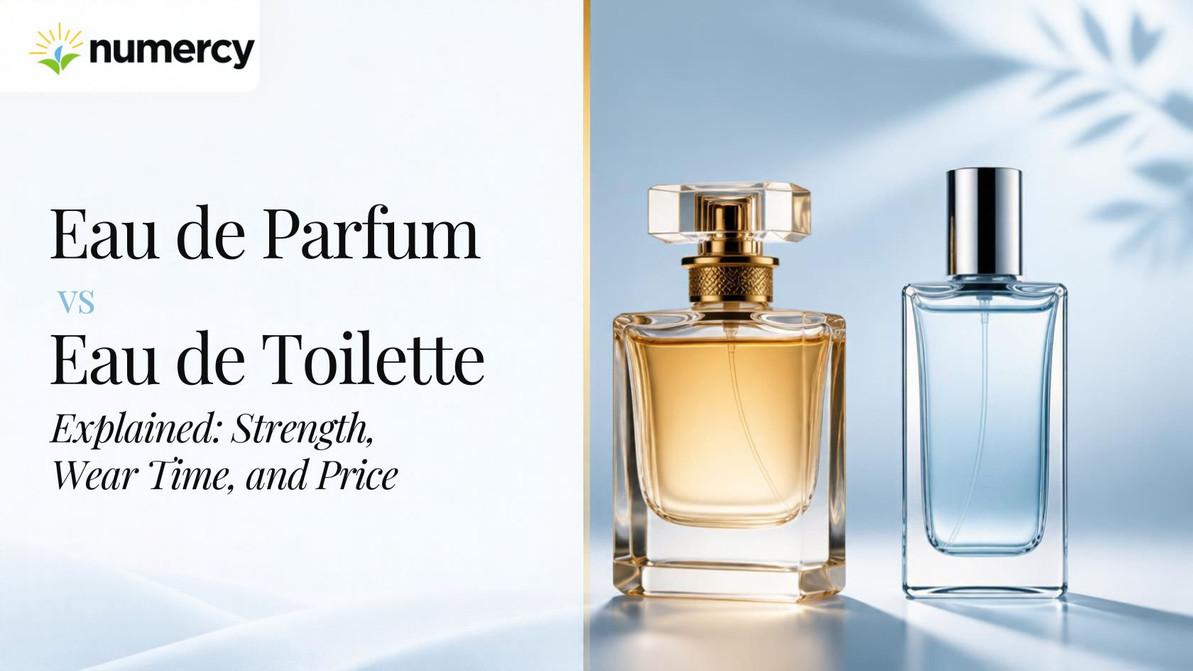
Eau de Parfum vs Eau de Toilette Explained: Strength, Wear Time, and Price
Eau de Parfum vs Eau de Toilette Explained: Strength, Wear Time, Price
Two bottles from the same fragrance line sit side by side on the shelf. The name on the front is identical. The only difference is the phrase underneath it: Eau de Parfum on one, Eau de Toilette on the other. They are not two labels for the same liquid poured into different boxes. They are two different builds of the same scent idea, and the gap between them shows up in three places shoppers care about most: how strong the fragrance feels, how long it stays on skin, and what it costs.
The short answer is concentration. Eau de Parfum typically holds 15 to 20 percent fragrance oil, while Eau de Toilette holds 5 to 15 percent. Everything else flows from that single number, including the wear time you notice at hour three and the price tag you notice at checkout.
The Core Difference: Fragrance Oil Concentration
Fragrance concentration is the backbone of the whole naming system. At the top sits Parfum, also called extrait, with up to 40 percent fragrance oil. Below it sits Eau de Parfum, generally described as a less intense version of Parfum, carrying roughly 15 to 20 percent fragrance oil. Then comes Eau de Toilette at 5 to 15 percent, which is the format many people reach for as a lighter, everyday spray.
Those percentages describe how much aromatic material is dissolved into the alcohol base. They do not automatically describe quality. A well-made Eau de Toilette from a careful house can be more interesting than a flat Eau de Parfum, and the same scent released in both formats will often use the same perfumer and the same note structure, just at different strengths.
| Format | Typical fragrance oil | General character |
|---|---|---|
| Parfum (extrait) | Up to 40% | Highest concentration, most intense expression of the scent |
| Eau de Parfum (EDP) | 15% to 20% | Richer, denser, often longer lasting |
| Eau de Toilette (EDT) | 5% to 15% | Lighter, fresher feeling, easy to wear daily |
Strength: Why More Oil Does Not Always Mean a Louder Scent
Eau de Parfum is generally the richer of the two formats, and that richness is what most people mean when they call a fragrance strong. The higher oil load produces a fuller, more enveloping cloud that sits closer to the skin and lingers.
There is a wrinkle here that confuses a lot of shoppers. An Eau de Toilette can sometimes smell stronger than an Eau de Parfum, particularly in the first stretch after spraying, because the scent evaporates off your skin quickly and throws its opening notes outward. That burst of brightness can read as intensity even though the formula carries less oil.
What this means in practice is that strength and concentration are related but not identical. A high-concentration fragrance can feel smooth and steady rather than loud, while a lower-concentration one can feel sharp and immediate and then fade. Reading percentages tells you what to expect over an afternoon, not just in the first two minutes.
Wear Time: 6 to 10 Hours vs 3 to 6 Hours
Wear time is where the concentration gap becomes easy to measure. Eau de Parfum can last 6 to 10 hours on the skin. Eau de Toilette usually lasts 3 to 6 hours. The reason is straightforward: a higher proportion of fragrance material means more of it stays behind on skin and fabric as the alcohol evaporates.
| Format | Typical wear time on skin | Practical implication |
|---|---|---|
| Eau de Parfum | 6 to 10 hours | Often covers a full workday from a single application |
| Eau de Toilette | 3 to 6 hours | Usually needs a midday touch-up for evening wear |
Two caveats matter more than the ranges themselves. First, these are general figures, and a specific bottle can land above or below them depending on the notes used. Second, skin plays a role. The same EDT behaves differently on two people, which is why testing on your own wrist beats trusting a description.
Which Format Suits Which Situation
Both formats are marketed for everyday use, which sounds contradictory until you look at what each one does well. Eau de Parfum is described as more concentrated and more intense, and is positioned as perfectly suited to daily wear because it holds. Eau de Toilette is lighter, fresh-feeling, and easy to wear every day, which makes it comfortable in close quarters and easy to reapply.
- Eau de Parfum: better when you want one application to carry you through meetings, errands, and dinner without thinking about it again.
- Eau de Toilette: better when you want a lighter footprint, plan to refresh during the day, or prefer scents that stay close rather than announce themselves.
- Both: worth owning in the same fragrance if you love the scent and want a heavier evening option alongside a daytime one.
Price: Why Eau de Parfum Usually Costs More
Eau de Parfum generally contains a higher percentage of fragrance oil than Eau de Toilette, which makes it richer, longer lasting, and often pricier. More aromatic material per bottle means more cost sitting inside the glass, and that shows up in retail pricing across the board.
Concentration is only one input, though. Brand name, bottle size, packaging, and where you buy all feed into the final number, which is why a large Eau de Toilette from one house can sit above a smaller Eau de Parfum from another. The useful habit is to compare the exact bottle in front of you rather than assuming the letters on the label settle the question.
At discount retailers, the comparison often looks different from a department store shelf. Listings usually show a suggested retail price next to a sale price, so the savings you see depend on the gap between the two rather than the format alone. Checking the concentration, the bottle size, and the listed original price together gives a clearer picture than any one of those numbers on its own.
How to Choose Between EDP and EDT
- Decide how long you need the scent to last. A full day points toward Eau de Parfum, while a few hours points toward Eau de Toilette.
- Decide how much presence you want. Richer and denser leans EDP, lighter and fresher leans EDT.
- Test on your own skin. Evaporation varies by person, and the same formula can behave differently on two wrists.
- Check the label carefully. Parfum, EDP, and EDT sit at different concentration levels, so the letters are not interchangeable.
- Weigh reapplying against paying more. If you do not mind a midday spray, a toilette can stretch further than expected.
Reading Labels Beyond EDP and EDT
The naming system extends past these two formats. Parfum, or extrait, sits at the top of the concentration ladder with up to 40 percent fragrance oil and delivers the most intense version of a composition. Some fragrance guides also list eau de cologne alongside parfum, EDP, and EDT, though concentration ranges for that category vary and are worth confirming on the product page before you buy.
Because ranges differ between houses, the safest approach is to treat the label as a signal rather than a guarantee. A brand that lists its own concentration percentages is giving you more to work with than one that only prints three letters.
What to Check Before Adding a Bottle to Your Cart
- The format letters, spelled out in full in the product title or description.
- The fragrance oil percentage, when the brand publishes it.
- The bottle size, since a larger Eau de Toilette can cost more than a smaller Eau de Parfum.
- The listed original price next to the current price, so you can judge the actual discount.
- The retailer's authenticity statement, which matters more in fragrance than in most categories.
None of these checks take long, and together they answer the questions that a concentration percentage raises: how the scent will wear on you, how often you will need to reapply, and whether the price you are paying reflects the format in the bottle.
Frequently Asked Questions
Is Eau de Parfum better than Eau de Toilette?
Neither is better in absolute terms. Eau de Parfum carries more fragrance oil, usually 15 to 20 percent, so it tends to be richer and last longer. Eau de Toilette carries 5 to 15 percent, which makes it lighter and fresher. The better choice depends on how long you want the scent to last and how much presence you want it to have.
Does Eau de Parfum last longer than Eau de Toilette?
Yes, on average. Eau de Parfum can last 6 to 10 hours on skin, while Eau de Toilette usually lasts 3 to 6 hours. The higher fragrance oil concentration in EDP is the reason. Individual results still vary based on the specific notes in the formula and how the scent behaves on your own skin.
Why does Eau de Parfum usually cost more?
Eau de Parfum contains a higher percentage of fragrance oil than Eau de Toilette, which makes it richer, longer lasting, and often pricier. More aromatic material per bottle means higher production cost. Brand, bottle size, and retailer pricing also affect the final number, so concentration alone does not determine what you pay.
Can an Eau de Toilette smell stronger than an Eau de Parfum?
It can, at least in the moment. Eau de Toilette sometimes smells stronger because the scent evaporates off your skin quickly, projecting its opening notes outward. That burst can read as intensity even though the formula holds less fragrance oil. Over several hours, the Eau de Parfum typically settles in and outlasts it.
How much fragrance oil is in Eau de Toilette?
Eau de Toilette typically contains 5 to 15 percent fragrance oil, compared with 15 to 20 percent in Eau de Parfum and up to 40 percent in Parfum. That range is general rather than fixed, so concentration can differ between fragrance houses. Checking the specific product description is the most reliable way to confirm what a bottle contains.
Recent Posts
-
Eau de Parfum vs Eau de Toilette Explained: Strength, Wear Time, and Price
Eau de Parfum vs Eau de Toilette Explained: Strength, Wear Time, Price Two bottles from the same fra …Oct 2nd 2026 -

Eau de Parfum for Men: How to Pick a Strength He'll Actually Finish
Eau de Parfum for Men: How to Pick a Strength He'll Finish A bottle that stalls at the halfway mark …Oct 1st 2026 -
Cologne Gift Sets for Men vs Single Bottles: Better Gift?
Cologne Gift Sets for Men vs Single Bottles: Better Gift? A cologne gift set looks like the safer pr …Sep 29th 2026