
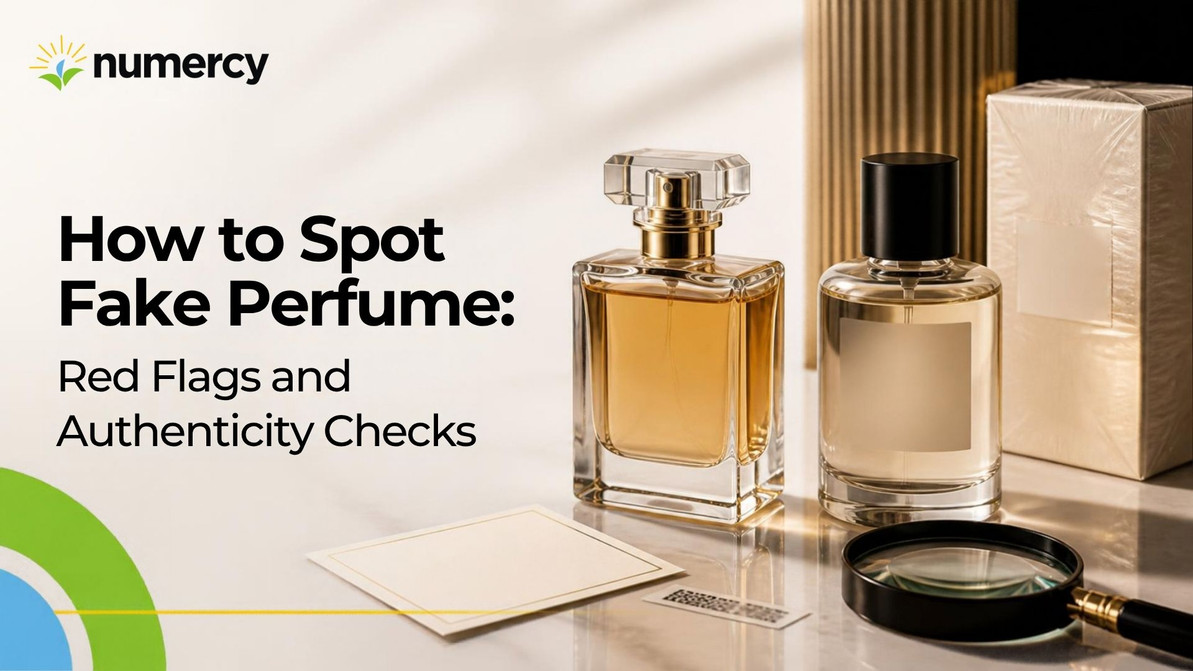
How to Spot Fake Perfume: Red Flags and Authenticity Checks
How to Spot Fake Perfume: Red Flags and Authenticity Checks
A counterfeit bottle rarely announces itself. It arrives in a box that looks close to the real thing, carries a familiar name, and often smells near enough that you start second-guessing your own nose. That is exactly why learning how to spot fake perfume comes down to a set of checks you can run in a sensible order, rather than one gut feeling. Some checks happen before you pay. Others happen the moment the package lands on your doorstep.
Why Counterfeit Perfume Is More Than a Wasted Purchase
Real fragrance development is slow and expensive. A perfume typically takes a full year to create, with as many as 600 trials conducted by the creator before a formula is finalized. Evaluators, graphic designers, glassmakers, packaging designers, and dermatological testers all play a role in getting a scent to market. Fragrances also go through costly dermatological testing to reduce the risk of irritation and intolerance, and a dossier is then sent to the poison control center.
Counterfeit operations skip every one of those steps. There is no dermatological testing, no safety dossier, and no documentation behind whatever liquid is actually inside the bottle. When you buy a fake, you are spraying an untested product onto skin that is often more sensitive than the rest of your body. Even when the scent smells recognizable, the ingredients and their concentrations are unknown, and that is before you get to the money you spent.
The Price Test Comes First
Price is the primary indicator. If a fragrance is significantly lower than the original, or simply too cheap for the brand and size on offer, treat that as your first warning sign. Legitimate retailers run real discounts, and a good sale is not proof of anything on its own. The useful question is not whether something is cheap, but whether the cheapness can be explained.
A discontinued bottle being cleared out, a gift set missing its outer sleeve, or a seasonal promotion all create genuine low prices. A current bestseller, sealed and undamaged, at a fraction of what every other seller charges, is a different situation entirely. When you cannot construct a believable reason for the discount, slow down and run the rest of the checks on this list before handing over payment.
Packaging Red Flags to Check Before You Open the Box
Packaging is where most counterfeits give themselves away, and it is the area you can evaluate the fastest. Before you tear anything open, look closely at the wrap, the printing, and the colors. Keep the box intact until you have finished checking, because returning a fake gets much harder once the packaging is destroyed.
Cellophane Wrapping
Counterfeits often use loose, uneven wrapping with visible folds. Genuine bottles generally arrive in tight cellophane that hugs the box, with clean corners and a straight seam. If the film looks baggy, bunches up oddly at one edge, or wrinkles in a way that suggests it was applied by hand rather than by machine, take a closer look. Poor cellophane is one of the most common tells, and it is visible before you spend a cent opening anything.
Print Quality, Fonts, and Serial Numbers
Low-quality packaging tends to show up as spelling errors, uneven fonts, and missing serial numbers. Compare the alignment of the text, the weight of the lettering, and the spacing between characters. Brand names and product names are set by designers who care about typography, so a stretched logo or a font that sits slightly off is meaningful. Reading the box copy out loud is a fast way to catch mistakes, because misspellings on packaging are difficult to notice when you skim.
Color Accuracy and Print Fidelity
Fakes often have faded, washed-out, or slightly incorrect shades compared with the real deal. Hold the box next to a product image from the brand's own site or a counter display if you have access to one. Slight shifts in gold, silver, or deep saturated tones are easy to miss in isolation but obvious in comparison. The same logic applies to the label on the bottle itself, so check both.
Batch Codes: The Check That Does the Most Work
To spot a fake perfume, check the batch code, an alphanumeric identifier usually printed on the bottom of the bottle and on the box. The critical step is confirming the two match each other. A bottle and box that carry different codes have likely been paired together after the fact, which is a strong sign that at least one of them is not what it claims to be.
A missing code is its own red flag. Codes should be legible, consistently placed, and printed rather than scrawled. What batch codes cannot do is settle the question alone. Formatting varies between brands, and a code that matches on both the box and the bottle still only proves the packaging is internally consistent. If you want brand-specific confirmation, ask the brand or an authorized retailer directly rather than relying on a general rule of thumb.
Inspecting the Bottle and Glass
Once the box is open, move to the bottle. Check for air bubbles in the glass, uneven seams, and any roughness around the edges of the base or shoulders. Genuine bottles are produced by glassmakers working from precise specifications, and the finish tends to feel clean and consistent. Counterfeit glass is often thinner, heavier in the wrong places, or visibly imperfect under good light.
Work through the functional parts as well. The cap should sit firmly and squarely, not wobble or slide. The atomizer should spray evenly rather than dribble, sputter, or shoot a crooked stream. The dip tube inside should reach the bottom of the bottle and sit reasonably straight. None of these details proves authenticity by itself, but several small defects together add up to a convincing case against the bottle in your hand.
What the Fragrance Itself Can Tell You
Smell is the check people trust most and the one that misleads them most often. Shoppers who bought perfumes at unreal discounts have described their purchases as looking just like the originals, including the scent, while still harboring doubts about what they received. A counterfeit can approximate the opening notes well enough to pass a quick sniff, especially in the first few minutes.
Where fakes usually fall apart is over time. Real fragrances are built to develop, shifting from top notes into heart and base notes and staying on skin for hours. Counterfeits tend to flatten out, fade quickly, or turn harsh and chemical as they dry down. If a scent collapses within an hour or two when others describe it as long-lasting, that gap between expectation and experience is worth investigating. Smell alone is not proof, but it is useful evidence when combined with the packaging and code checks.
A Quick Authenticity Checklist
If you want a single pass to run through before or after a purchase, this table covers the checks that carry the most weight.
| Check | What to look for |
|---|---|
| Price | Significantly below the original or simply too cheap for the brand and size |
| Cellophane wrap | Loose, uneven film with visible folds instead of tight, clean wrapping |
| Box printing | Spelling errors, uneven fonts, misaligned or stretched logos |
| Serial numbers | Missing entirely, or printed inconsistently with the rest of the label |
| Color fidelity | Faded, washed-out, or slightly incorrect shades |
| Batch code | Present on both bottle and box, legible, and matching on both |
| Glass and seams | Air bubbles, uneven seams, rough edges, wobbly caps |
| Scent over time | Flattens or fades fast instead of developing through its notes |
Buying Discounted Fragrance Without the Guesswork
Discounted fragrance and authenticity are not opposites. Value pricing usually comes from buying power, inventory turnover, closeouts, or packaging that is not the newest version on the shelf. What separates a legitimate deal from a risky one is whether the seller is willing to stand behind what they ship and whether the bottle itself passes the checks above.
Where you can, buy from sellers who state an authenticity commitment clearly and offer a return path if something looks wrong. Before checkout, ask for a photo of the batch code on the box and on the bottle, and confirm the two match. When the package arrives, keep the cellophane, the box, and your receipt until you have verified the code, examined the glass, and worn the fragrance at least once. If a purchase fails two or more checks on the list, contact the seller promptly rather than testing your luck with the rest of the bottle.
Frequently Asked Questions
Do fake perfumes smell the same?
They can smell surprisingly close, at least at first. Counterfeits often mimic the opening notes well enough to pass a quick sniff, which is why scent alone is a weak test. The differences usually appear over time, with fakes fading quickly, flattening out, or turning harsh and chemical during the dry down instead of developing.
Do fake perfumes have batch codes?
Sometimes they do, which is why the code needs more scrutiny than a glance. Check that a code exists on both the bottle and the box and that the two match each other. A missing code, a smudged one, or two codes that disagree are all reasons to question the bottle in front of you.
How can I verify if my perfume is authentic?
Work through the checks in order: price plausibility, cellophane tension, print and spelling, color accuracy, matching batch codes, and the condition of the glass and atomizer. If anything remains uncertain, contact the brand or an authorized retailer directly rather than relying on a general rule, since code formats differ between brands.
Is there an app that can check for fake perfume?
Batch code lookups are the closest thing to an automated check, and they are only as useful as the code you enter. No single tool settles authenticity across every brand. The most dependable approach is still the combination of a matching batch code, careful packaging inspection, and confirmation from the brand when a question remains open.
Recent Posts
-
How to Spot Fake Perfume: Red Flags and Authenticity Checks
How to Spot Fake Perfume: Red Flags and Authenticity Checks A counterfeit bottle rarely announces it …Sep 23rd 2026 -

When Is the Best Time to Buy Perfume? Seasonal Sales and Clearance Cycles
When Is the Best Time to Buy Perfume? Seasonal Sales and Clearance Cycles Perfume does not hold a si …Sep 21st 2026 -

Discount Eau de Parfum: How to Find Real Deals
Discount Eau de Parfum: How to Find Real Deals Eau de parfum is the format most fragrance fans reach …Sep 19th 2026