
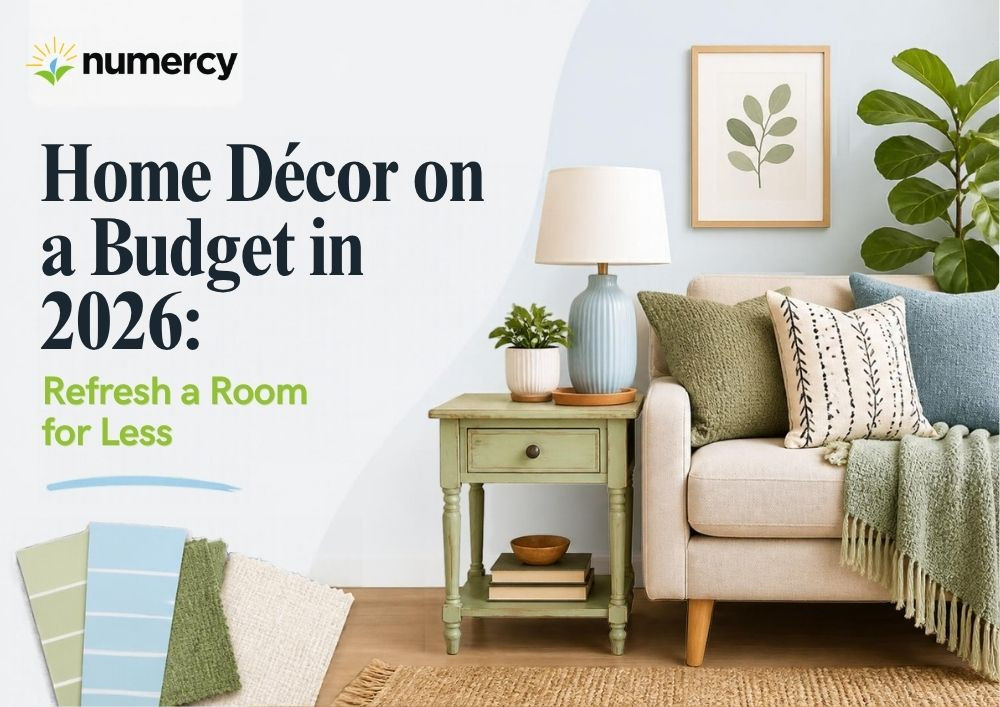
Home Decor on a Budget in 2026: Refresh a Room for Less
Home Decor on a Budget in 2026: Refresh a Room for Less
A room can go stale without anything being broken. The paint is still intact, the sofa still works, the shelves still hold the same objects they held two years ago, and yet the space has stopped feeling like yours. That is usually the point where people assume the only fix is a full redesign, which means new furniture, new lighting, and a much bigger bill.
It rarely has to go that far. Most decorating progress happens one small step at a time, which is exactly why budget decorating works so well. Move furniture. Add a lamp. Style a tray. Bring in flowers. Rearrange accessories. Those five moves alone can change how a room reads, and none of them require a shopping trip.
This guide covers practical home decor on a budget for 2026, including what to do first, which changes give the biggest visual return, where to shop cheaply, and how to plan a refresh that fits the money you actually have available.
Start With What You Already Own
The least expensive decorating material in your home is the furniture and accessories already sitting in it. Before you buy anything, spend an hour walking through the room and asking what could move. Budget decorating communities such as r/budgetdecor are built around the same idea: frugal and clever ways to improve your home, office, or any space you spend time in, using what is already there.
A surprising amount of a room's problem is placement rather than product. A sofa pushed flat against a wall can make a space feel like a waiting area. Pulling it forward, angling a chair, or swapping the position of two pieces can change traffic flow and make the room feel intentionally arranged.
Rearrange furniture before you buy anything
Take everything off the surfaces first so you can move freely. Then try the layout you have never attempted, even if it looks wrong at the start. Give it a day before you judge it. Furniture that has been in one spot for years will feel strange anywhere else for the first few hours, and that discomfort is not the same thing as a bad arrangement.
Shop your own accessories from other rooms
Walk through the rest of the house and collect items that have gone invisible where they currently sit. A vase from the kitchen, a stack of books from a bedroom, a tray from the bathroom. Rearranging accessories is one of the fastest ways to refresh a shelf or console table, because the objects get new context without costing anything.
Style a tray or a single surface properly
Pick one surface, clear it completely, and rebuild it with three or four items of different heights. A tray gives small objects a boundary and makes a coffee table or dresser look deliberate. Once that one surface looks right, repeat the approach on the next one. Slow, repeatable steps beat a single exhausting weekend of decorating.
Small Changes That Read as Big Upgrades
Once the free moves are exhausted, a handful of low-cost changes can carry a room much further than their price suggests. These are the updates that show up in almost every affordable decor collection published for 2026.
Fresh paint on one surface
Paint is one of the most frequently recommended affordable decor tools, and it does not have to cover an entire room. A single accent wall, a painted door, a refreshed trim, or a painted piece of furniture can shift the mood of a space. Many home improvement retailers publish free affordable decor idea collections built around paint, so you can look at finished examples before committing to a color.
Dress up your windows
Windows are often left bare simply because curtains feel like an expense. Dressing up your windows is listed among the classic big-impact, low-budget decorating moves, and it works because window treatments add color, height, and softness to a room all at once. If curtains are out of reach right now, check what you already have in storage before buying new.
Add light where the room feels flat
Adding a lamp is one of the simplest changes on the list, and it changes a room more than most people expect. Overhead lighting alone tends to make a space feel functional rather than comfortable. A second light source at table or floor level creates layers, and layering is what makes a room feel finished. Look for used lamps at secondhand sources before buying new.
Use shadow boxes and floating shelves
Shadow boxes and floating shelves appear repeatedly in 2026 affordable decor roundups because they solve two problems at once. They add display space without furniture, and they let you rotate small objects so a wall keeps changing without any new purchases. Group a few frames or objects on a shelf, then swap the contents when the arrangement starts to look familiar.
Where to Find Affordable Decor in 2026
Knowing what to change matters less if you do not know where to shop. A few source types consistently come up when designers are asked how they decorate on a budget.
Secondhand, vintage, and handmade marketplaces
Marketplaces such as Etsy are recommended by designers as a source for vintage textiles, rugs, handcrafted furniture, artwork, lighting, and small decorative accents. The advantage is character. A room filled entirely with mass-produced pieces can feel flat, and one good vintage textile or handmade object often does more for a space than several new accessories combined.
Home improvement and craft retailers
Large home improvement retailers publish seasonal affordable decor idea collections covering paint, wallpaper, repurposed furniture, shadow boxes, and floating shelves. These collections are useful as a planning tool even if you buy nothing, because they show how the same basic techniques look in finished rooms. Craft retailers serve the same purpose for smaller projects.
Thrift stores, estate sales, and community swaps
Secondhand shopping remains one of the most reliable ways to decorate for less, particularly for lamps, frames, trays, and textiles. Inspect anything upholstered carefully, and check whether lamps can be rewired before committing. Community swaps and neighborhood groups are also worth watching, since people regularly give away decor that no longer fits their own spaces.
Big-Impact, Low-Budget Moves by Room
The same few techniques work in nearly every room, but the priority shifts depending on how the space is used. The table below maps common low-cost moves to the rooms where they tend to matter most.
| Room | Low-cost moves worth trying first |
|---|---|
| Entryway or hallway | Fresh paint, a narrow console or shelf, a tray for keys, better lighting, and a rug or runner to define the space |
| Living room | Rearrange seating, add a lamp, style a tray on the coffee table, bring in flowers, rotate accessories on shelves |
| Bedroom | Dress the windows, layer a second light source, restyle the nightstand, swap artwork or frames |
| Home office | Floating shelves, painted wall or trim, cable cleanup, a plant or flowers, a lamp at desk level |
| Kitchen or dining area | Style a tray, bring in flowers, rearrange accessories, add a pendant or table lamp, refresh cabinet hardware if feasible |
Narrow hallways and small entryways respond especially well to this approach. Hallway makeovers, entryway inspiration, narrow hallway decorating, and small entryway projects are among the most common budget decorating searches, and they usually involve fresh paint plus one or two functional additions rather than a full renovation.
Repurposing Beats Replacing
Repurposed furniture shows up in nearly every affordable decor guide for a reason. A piece that no longer fits its original purpose can often be moved, repainted, or reassigned. A dresser becomes an entryway console. A side table becomes a nightstand. A bookshelf moves from an office to a hallway. The cost is time and possibly a small amount of paint rather than a new purchase.
This is also where wallpaper and fabric come in. Wallpaper on a single wall, the back of a bookcase, or inside a cabinet can change a surface without a full room project. Vintage textiles can be used as throws, table runners, or cushion covers, which stretches a single secondhand find across multiple rooms.
Build a Plan You Can Actually Finish
The most common reason a budget refresh stalls is that it gets planned as one enormous project. A better approach is to break it into small, finishable steps. One week you move furniture. The next you add a lamp. Later you style a tray, bring in flowers, and rearrange the accessories you already own. Each step stands on its own, and the room improves continuously instead of only at the end.
It also helps to write down what bothers you before you spend anything. If the complaint is that the room feels dark, the answer is probably a light source, not new furniture. If it feels cluttered, the answer is rearranging and removing, not adding. Matching the fix to the actual problem keeps spending low and results visible.
Finishing Touches That Cost Very Little
Rooms feel finished because of small sensory details, not because of expensive furniture. Bring in flowers, even inexpensive ones from a grocery store, and the room immediately reads as cared for. Add scent with a candle, a diffuser, or a fragrance you already own, since scent is one of the few finishing touches that changes how a space feels within minutes rather than days.
If you are shopping for home goods alongside a room refresh, discount retailers that carry both everyday home items and fragrances can let you combine the practical and the decorative in one order. Check product details and authenticity information before buying, particularly on branded items, and confirm current pricing and shipping terms on the retailer's own site rather than relying on a third-party summary.
None of this requires a large budget. It requires deciding what specifically feels wrong, fixing that one thing, and repeating the process until the room feels like yours again.
Frequently Asked Questions
What is the cheapest way to decorate a house?
The cheapest approach is to use what you already own before buying anything. Move furniture, add a lamp from another room, style a tray, bring in flowers, and rearrange your accessories. Fresh paint on a single surface and dressing up your windows are the next most affordable upgrades, because they change large areas of a room without replacing any furniture.
Where can I buy really cheap home decor?
Secondhand sources are usually the most affordable option. Thrift stores, estate sales, and community swaps regularly have lamps, frames, trays, and textiles. Designers also point to marketplaces such as Etsy for vintage textiles, rugs, handcrafted furniture, artwork, lighting, and small decorative accents, where prices vary widely by seller and item.
How do I refresh a room without spending any money?
Clear every surface, then rebuild each one with a few objects of different heights. Move the furniture into a layout you have not tried before, and give it a full day before judging it. Shop other rooms in your home for accessories that have become invisible where they currently sit, then rotate them into the space you are refreshing.
What if I only have one afternoon to work on the room?
Pick a single task instead of the whole room. Rearranging accessories on one shelf, styling one tray, or moving one piece of furniture is enough to change how a space reads. Small steps accumulate, and most decorating progress happens gradually rather than in one long session, so one finished surface is a real result.
Recent Posts
-

7 Best Woody Fragrances for Men in 2026
7 Best Woody Fragrances for Men in 2026 Woody fragrances for men form the architectural foundation …Oct 16th 2026 -

How to Style a Living Room With Sale-Priced Decor Pieces
How to Style a Living Room With Sale-Priced Decor Pieces Styling a living room with sale priced dec …Oct 15th 2026 -

Demeter Cologne for Men: Single-Note Picks That Wear Well
Demeter Cologne for Men: Single-Note Picks That Wear Well Demeter built its reputation on fragrance …Oct 14th 2026